Living with a Smile
she’ll “Die With a Smile”
red-shoed flamenco dress sway
Gaga’s salsa scores
Buddhist and Baptist Walkers For Peace—Bhikku Pannakara and Jesse Jackson
“Today is going to be my peaceful day.” On October 26th, 19 saffron and maroon robed Theravadin Buddhist monks set out from Fort Worth, Texas on a 2,300 mile walk for peace. Touting compassion and promoting mindfulness—refusing anger and breathing calm. Fifteen weeks later, with grateful walkers cheering and often merging with them all along their way, the monks stopped at the National Cathedral. Silent community. Overwhelmed by the same emotions experienced by their countless in-person and online followers, Venerable Bhikku Pannakara speaks truth at the Lincoln Memorial closing ceremony: “We are not alone.” Step by step—moment to moment.
Eight first-year college students walked into the “whites-only” Greenville Public Library in South Carolina, browsing aisles and reading books in 1960. The Greenfield Eight refused to leave—Jesse Jackson and his friends, arrested for disorderly conduct, secured the desegregation of the city’s public library system. Georgia’s Senator Raphael Warnock, senior pastor and successor to Dr. King at Atlanta’s Ebenezer Baptist Church, remarked on Jackson’s February 17th death. “With an eloquence and rhythmic rhetoric all his own, Jesse Jackson reminded America that equal justice is not inevitable; it requires vigilance and commitment, and for freedom fighters, sacrifice. His ministry was poetry and spiritual power in the public sphere.” Two months before his ordination as a Baptist minister, young staffer Jackson witnessed Dr. King’s murder at the Lorraine Hotel in Memphis. He walked with laborers along picket lines, held hands in disadvantaged communities, brokered peace agreements around the world, and organized countless voter registration drives.
From Reverend Jackson’s speech at the 1988 Democratic National Convention: “We must find common ground as the basis for survival and change…. You must never stop dreaming. Face reality, yes, but don’t stop with the way things are. Dream of things as they might be…. Wherever you are tonight you can make it. America will get better and better. Keep hope alive. Keep hope alive. Keep hope alive. I love you very much.”
Singing Protest Songs—Nils Lofgren and Stephanie Lovely
“No Kings, No Hate, No Fear” encourages Nils Lofgren in his soft and propulsive street anthem. The guitarist compares today to the Vietnam era: “This time feels different. I wanted to try writing an anthem that was primitive, that was honest, and that didn’t have a lot of words, that was repetitive. Because we need that.” Lofgren hands “Freedom’s Gladiators” everywhere their marching orders for March 28th protests—these peaceful demonstrations expected to be the largest ever in this country. “A mighty people here / we the people feel the beat.” And freedom beats, he repeats, “(for all).”
Roll call for all. Horns and bells—whistles and music. Stephanie Lovely grasps the unequalled power of song in protesting. “They are singing in order to inspire desperately needed hope, and to share it with the watching world.” Sharing music in public spaces creates communion—chanting words of resistance sends an open invitation. “Immigrants inside locked-up homes, advocates holding protest signs, people driving by on their way to work – all hear the songs.”
Tilling Seeds of Love—Poets Jane Hirshfield and David Whyte
“Each one is you.” Jane Hirshfield casts a “Spell To Be Said Against Hatred.” Drop otherness pronouns—they, those, them. Opt for we. Us. “Until the grief, pity, confusion, laughter, longing know themselves mirrors. / Until by we we mean I, them, you, the muskrat, the tiger, the hunger.” Imagine until becoming now.
We know the difficulty of “The Journey” taken by David Whyte. Let’s go outside and gaze up. Geese paint “black silhouettes” on the sky’s blue palette. The inscription in the airy light above also pulses as the “wedge of freedom / in your own heart.” Feel it? “You are arriving.”
Robert Duvall as
Boo Radley treasures
Celebrating Puerto Rico—Benito Antonio Martínez Ocasio and Jean Guerrero
A happy child named Benito, unhappily dressed in a bunny costume, chose “Bad Bunny” as his stage name when starting out on his career. Things worked out. Reggaeton—on and on. The Census Bureau reports that Spanish is the first language of 42,000,000 Americans. Concerned for the safety of his fans on the US mainland due to ICE, Bad Bunny shifted his 2025 July-September concert series to Puerto Rico. His Super Bowl halftime show, a global musical and educational phenomenon, guarantees endless replays and conversations. Did you hear? America includes Chile, Argentina, Uruguay, Paraguay, Bolivia, Peru, Ecuador, Brazil, Colombia, Venezuela, Guiana, Panama, Costa Rica, Nicaragua, Honduras, El Salvador, Guatemala, Mexico, Cuba, the Dominican Republic, Jamaica, Haiti, the United States (of America), Canada, and Puerto Rico. His February 1st Grammys acceptance speech for the Album of the Year Award, “DtMF” the first Spanish recording to win, also sings beautifully. “Before I say thanks to God, I’m going to say ICE out. We’re not savage, we’re not animals, we’re not aliens, we are humans, and we are Americans…. The only thing more powerful than hate is love.”
“We are bodies that bleed and sweat and dance. We are hearts that break and heal.” Daughter of a Puerto Rican mother and Mexican father, Latina journalist, author, and investigative reporter Jean Guerero explains her vocation. “A fronteriza perspective, born of growing up on the border and reporting across them, permeates all my work, which strives always to center our common humanity.” Her auto-immune health deteriorated after finishing her 2020 book Hatemonger: Stephen Miller, Donald Trump, and the White Nationalist Movement, and it worsened enduring Fox News and social media harassment while working as the only Latina opinion columnist at the LA Times. Fearing that she needed to leave journalism, Guerrero gradually recovered her health, sparked by attending a 2023 Bad Bunny concert. She learned salsa—“to be alive in my body, and alive to other bodies.” Dancing’s sensuality delights and sustains her. And her article, “Bad Bunny Turns ‘God Bless America’ Into a Celebration of the Americas,” dances, too. Yes, real America is multiracial and multilingual. Guerrero not only salsas, but she details the many lessons woven into the Super Bowl halftime show. “Bad Bunny’s most radical message came in the first few sections of the show…before he even stepped on stage.” Sugarcane fields—plantation economy.
Olympic skater
gleeful perfection
Piano Keys to the Sky—Dolly Parton, Bill Charlap, and Graham Reynolds
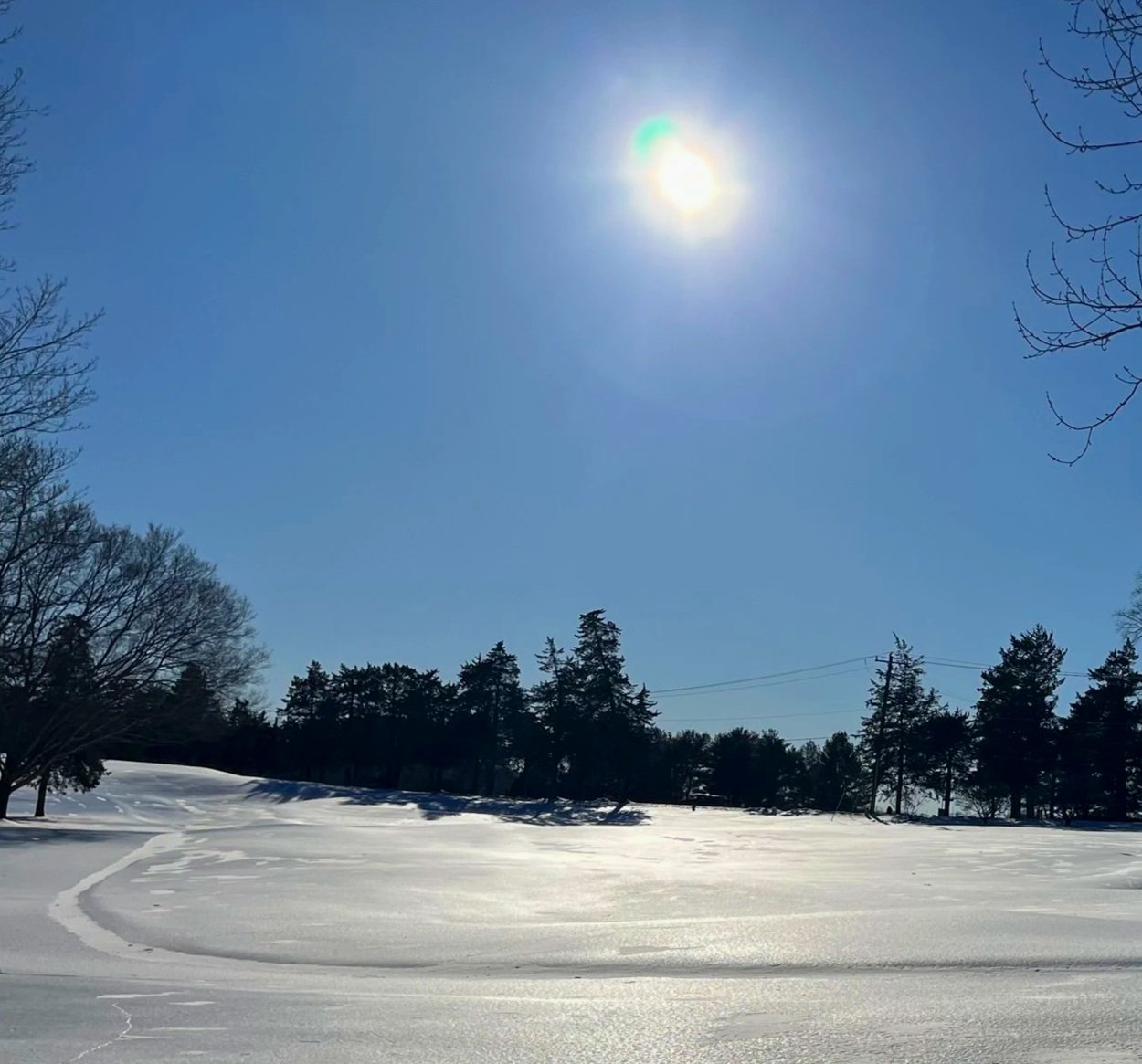
Dolly Parton shares the “Light of a Clear Blue Morning” with Miley Cyrus, Queen Latifah, Reba McEntire, Lainey Wilson, and us. Her 1977 release comes alive anew, the vocalists backed by David Foster’s piano and joined by the Christ Church Choir. Yearning for sunshine’s rays—starving for freedom’s taste. “Oh, I’ve been like a captured eagle, you know an eagle’s born to fly / Now that I have won my freedom, like an eagle I am eager for the sky.”
The lyrics sing in memory’s notebook. Watch Bill Charlap’s piano keys open “Blue Skies.” Hearten under a besotting “Blue Moon” with Graham Reynolds.
keeping hope alive
looking up and seeing blue
we are arriving


Told with McCarty’s characteristic wisdom, marvel, exuberance, and good will, Leaving 1203 is about navigating that way through. The author draws on all available resources—friends and strangers, food and laughter, life lessons learned in the very house she now empties, and, not least, her newly-inherited West Highland terrier, Billy. McCarty simultaneously learns and deftly teaches the fine arts of remembering, letting go, and holding on to what matters most. She not only finds the way through, she shows the way.
the greatest gift an author could give a reader… lessons of a universally philosophical and existential kind… a touching journey… a welcome, upbeat ride
Read More & Buy